Sometimes you just recognize a single moment in the twilight of dusk when light stops being a measurement and becomes a haunting. It’s that suspended, sapphire hour when the physical world loosens its grip on reality. We’re only left with a quiet and terrifying pull of our own aching longing. If that fleeting hour were ever trapped and distilled, you would find it pressed into vinyl. It would sound exactly like “Fade Into You.
If that fleeting hour were ever trapped and distilled, you would find it pressed into vinyl. It would sound exactly like “Fade Into You.”
Released in late 1993 on Mazzy Star’s masterpiece So Tonight That I Might See, “Fade Into You” isn’t merely a ballad; it’s a slow-motion collapse.
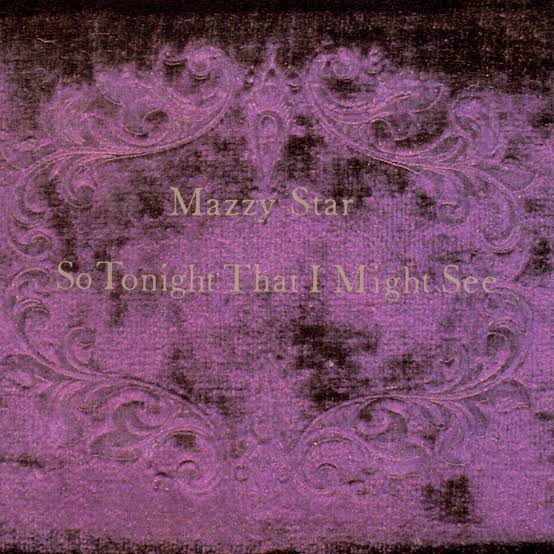
The song is absolutely the undisputed high-water mark of dream-pop. It’s a track that operates less like a song and more like a narcotic fog. It drifts through thirty years of cultural memory without losing a single drop of its bruised, velvet mystery.
To understand our ghosts, we first have to map the graveyard. Mazzy Star was born out of the neo-psychedelic embers of Los Angeles’s Paisley Underground. Guitarist and producer David Roback had already helped define the scene with the bands Rain Parade and Opal. When Opal’s original vocalist Kendra Smith walked off stage mid-tour in 1987, Roback turned to Hope Sandoval. Hope was a young, reticent East LA singer whose voice was spun moonlight and had a demeanor made entirely of smoke.
Together, Roback and Sandoval abandoned the standard machinations of the 1990s music industry. Where grunge screamed its pain to the rafters, Mazzy Star whispered theirs into the dark. They were famously allergic to fame. Live performances were executed under pitch-black lighting; interviews were met with excruciating silences. As their smoldering origin from the underground suggests, they were not concerned with the outside world.
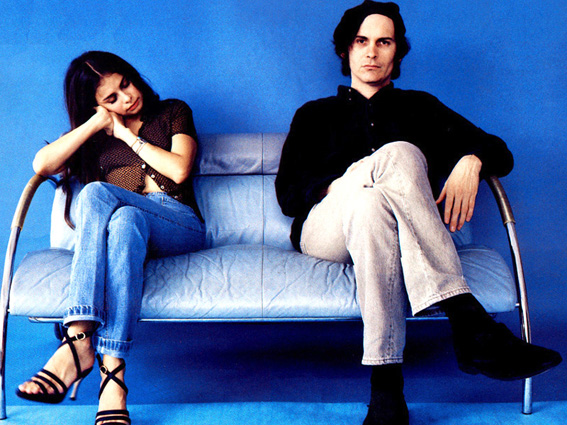
In 1993, within the solitary confines of their internal world, “Fade Into You” was written in a single day. Built on a gentle acoustic pulse and a mournful slide guitar that wept like wind, it provided the canvas for Sandoval’s immortal opening line: I want to hold the hand inside you. Despite their anti-fame mission statement, “Fade Into You” peaked at #3 on the Billboard Modern Rock Chart, and #44 on the Hot 100. Which you have to imagine might have created a philosophical dilemma for a band who wanted to connect on a mythical and emotional level with listeners, but also wanted to avoid the labels of popular music.
What makes “Fade Into You” so utterly ruinous? It’s Hope Sandoval’s lyrical realization of erasure, and Roback’s perfect soundtrack. Sandoval doesn’t sing about loving someone; she sings about disappearing into them until there is nothing left of herself. It’s the definition of unrequited transcendence.
The “you” in the song was always an enigma. With every whispered word, the song’s subject is distant and hollow. Maybe even entirely incapable of holding the emotional weight thrust upon them (“You live your life, it’s completely real / I look to you and I see nothing”). It’s as if Sandoval is telling the collective story of everyone who’s ever loved. It’s the ultimate anthem of unrequited soul-merging. Sandoval’s delivery is detached but agonizingly intimate. A vocal track that feels less like a studio recording and more like a therapy share.
As you’re listening, you recognize that behind her voice, Roback’s arrangement acts as a tide. The slide guitar swells like the California tide pools at midnight. Infinite, and vaguely dangerous.
The song’s mythos grew precisely because of the unwillingness of Sandoval and Roback’s refusal to explain it. There were no dramatic press releases or tell-all music video commentary tracks. Instead, the iconic music video by Kevin Kerslake framed the duo against projections of clouds and the vast void of the Mojave Desert. Images that painted the true picture of emotional isolation by putting those words to music. Mazzy Star existed outside of time, and so “Fade Into You” became timeless.
Before Hope Sandoval leaned into a dynamic microphone and let her velvet exhale drift over an acoustic guitar, mainstream music demanded projection. The 1990s were an era of belting divas, grunge growls, and theatrical alt-rock. Sandoval quietly shattered that paradigm by turning understatement into ultimate power.
She unwittingly birthed a lineage of modern vocalists who treat the microphone not as an amplifier for power, but as an intimate instrument of telling secrets. Her calm, breathy cadence carries as much emotional weight as the notes themselves, not realizing she laid the foundational DNA for generations of melancholic pop.
Lana Del Rey inherited Sandoval’s cinematic, desert-noir lethargy, weaponizing dreamy detachment and tragic romanticism into an empire.
Billie Eilish took Sandoval’s intimacy to its modern pinnacle, turning whispery, breath-heavy vulnerability into a global revolution.
The latest phenomenon, Phoebe Bridgers and the indie-folk movement, adopted her quiet cadence, crafting songs where the sheer restraint of the vocal delivery makes the emotional devastation feel infinitely heavier.
Sandoval proved that you do not need to shout to tear a room apart. By pulling the listener in rather than pushing her voice out, she created a blueprint for the modern sad-girl aesthetic, showing that a whisper can reverberate louder than a canyon full of screams.
While born in the slacker-cynicism of Generation X, “Fade Into You” refused to stay tethered to its era. It’s a song that belongs natively to anyone who has ever felt young, and impossibly fragile in a world moving too fast.
Youth is an eternal country of yearning, and “Fade Into You” is its anthem. For Gen X, it was the sanctuary of static-filled cassette tapes played in rusted sedans at midnight. For Millennials, it became the cinematic soundtrack to the coming-of-age cinema. For Gen Z, it mutated once more, emerging across digital feeds as the ultimate in low-fidelity aesthetics.
The song proves that youth isn’t defined by technology or decades, but by shared, sacred vulnerability. Everyone, despite age or generation, has experienced the dizzying, terrifying desire to dissolve into something larger than oneself. Over a billion streams later, across every imaginable medium, its spell remains entirely unbroken.
The song has become an archetype. While it’s nearly impossible for other artists to replicate, they inevitably try to step inside its shadow. Yet “Fade Into You” is notoriously difficult to cover; stripped of Sandoval’s specific, delicate sorcery, it can easily collapse into simple folk strumming. Only a select few have managed to reinterpret its magic without breaking the glass.
The best attempt at covering the song may be the emotional gravity of the J Mascis version (Dinosaur Jr.).
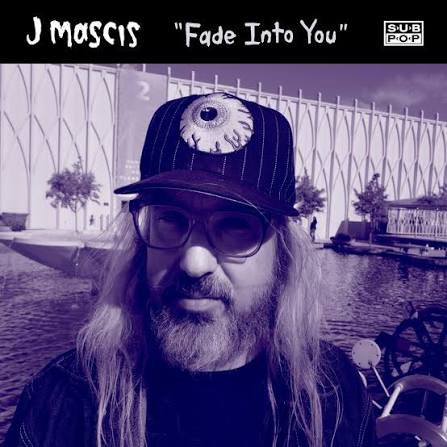
It’s a fascinating and fragile reinvention. Stripping away his usual wall of fuzz pedals and legendary amplifier volume, Mascis acoustic-picked his way through a wonderfully quiet 7″ release. His drawling wounded falsetto transformed Sandoval’s serene sadness into a cracked, crushingly honest campfire prayer. With his interpretation, Mascis proved that even alt-rock’s most iconic, guitar-shredding titan yields to the song’s soft spell.
The song has been covered countless times by industry heavyweights and up-and-comers. Whether it’s the stage or coffee shop, the song lives on. Whether it’s a cover by Miley Cyrus or an open mic night in a bustling urban downtown, “Fade Into You” remains a cathartic retreat.
David Roback passed away in February 2020, closing the physical chapter on one of modern music’s most enigmatic partnerships. The sanctuary he built alongside Hope Sandoval remains entirely immortal. Together they created an endless sanctuary. A soft shadow for every wandering soul searching for a place to surrender their sorrow.
“Fade Into You” isn’t a relic on its way to preservation in amber. The song continues to be a living, breathing tide. Generations will continue to age, trends will bleed into obscurity, and the world’s noise won’t be able to help but grow ever louder. But whenever the sun dips below the horizon, and a lonely heart seeks a mirror for its unspoken ache, this song will be waiting quietly. While Mazzy Star has gifted us a gentle pull, drawing us into the dark, don’t lose sight of it teaching us that to fade isn’t to vanish, but our chance to become infinite.
If you’re interested in more Mazzy Star, these are some Go-To tracks to kickstart your newfound fandom.
“Into Dust”: A haunting, sparse acoustic number that gained a massive modern revival through various film and television placements.
“Halah”: An early standout breakup track off their debut album She Hangs Brightly.
“Blue Light”: A shimmering, slow-burning, and tenderly delivered melody that highlights the group’s signature late-night mood.
I’m Music Magazine Music Journalist Jon Faia
You Can Find Mazzy Star Online: