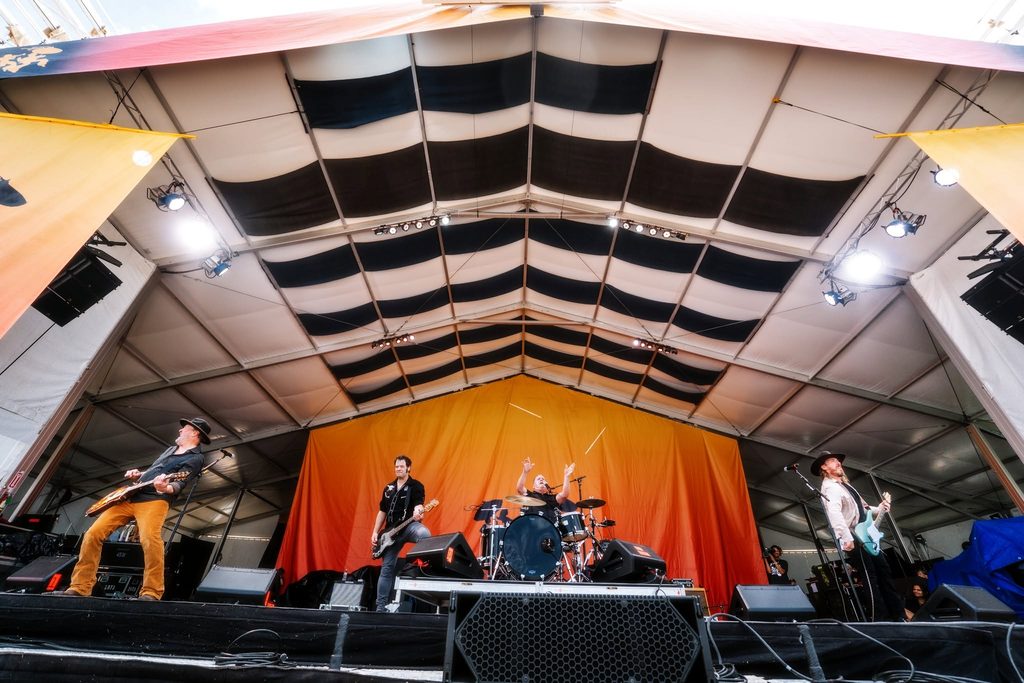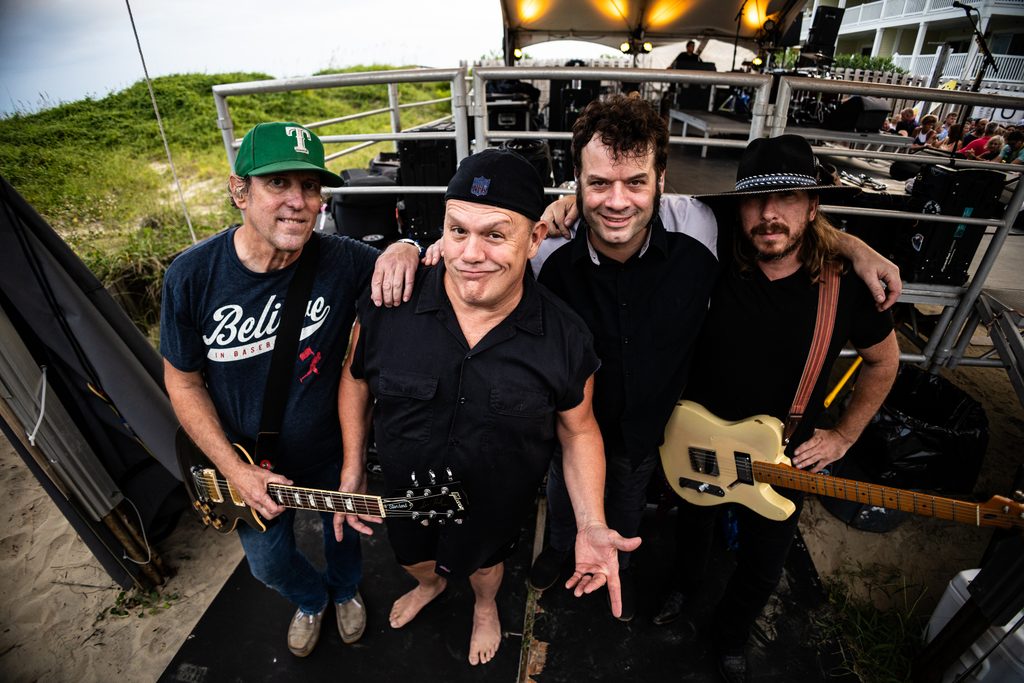
For Fred LeBlanc, Cowboy Mouth has always been about more than songs or spectacle. The New Orleans band’s drummer and lead singer wants people to leave a show feeling better about being alive, even when life isn’t easy. In a conversation with I’m Music Magazine’s Tim Board, LeBlanc discussed the band’s decision to release new music every month in 2026, writing beyond the familiar sound of “Jenny Says,” what performing after Hurricane Katrina meant to him, and the surprising ways audiences keep shaping the Cowboy Mouth experience. He also shared a little Texas connection before the conversation ended.
TIM BOARD: You released Cover Yo’ Azz! last year, and now you’re putting out a new song every month. After all these years of making records, what made you take this approach of releasing a single each month?
Fred LeBlanc/Cowboy Mouth: Well, we’re just trying to keep new music, any new music we make, in the forefront of the Cowboy Mouth community and any new fans that might be coming in.
You know, the way the music business has changed so drastically in the last 15, 20 years, unless you’re somebody like Taylor Swift or The Beatles or something like that, you can’t depend on the life of an album, the life cycle that an album used to have. You used to be able to put out an album and then tour for it for about a year, with not only promotion, but sales. That was the playing field.
Well, with the advent of streaming and all that good stuff, it tends to make recorded music a lot less valuable to the consumer because everything’s just bitten off in little chunks. It’s still fun to make. It’s still fun to record. It’s still fun to write.
As a creative person, I still really enjoy writing songs and the process of recording them. But without the apparatus of an album and the promotion machine behind that, whether it’s even just a band going on the road or something like that, it’s difficult to keep people’s attention focused on one specific tune when you release a whole bunch of stuff at once.
But live and learn, you know, adapt or die, and that’s kind of what we’re trying to do with this stuff.
TIM BOARD: Has the monthly schedule made you more spontaneous as a writer, or does it create a different kind of pressure for you?
A little bit of both, but, I get to play music for a living. I mean, this is kind of what I signed up for. I can’t really complain about pressure. When Cowboy Mouth signed our first record contract with a major label back in, like, ’96, ’97, whenever it was, I told myself that I wasn’t going to complain about getting bitten if I was going to dive in a pool with a bunch of sharks.
So I kind of keep the same mindset in that this isn’t ever a “have to,” this is a “get to.” As long as I’m still able to play shows and get to play with Cowboy Mouth, and we get to present new music on a regular basis, then I consider myself very fortunate.
TIM BOARD: The reception of the band releasing singles each month as opposed to doing an album, how has that been? And has that surprised you?
FRED LEBLANC: It’s been pretty good. It’s been pretty good in that a lot of the fan base really enjoys having something new every month to look forward to.
People don’t have the time or the patience to swallow an album whole like they used to. You’d be able to set aside an hour or two to really just dig into the minutiae of what your favorite artist would put out, and life is so fast-paced these days. It’s just kind of, like I said earlier, adapt or die.
TIM BOARD: I was reading about how the song “The Mississippi River Rain” came together, and what stood out was how personal and reflective the inspiration sounded. Most people associate Cowboy Mouth with this enormous burst of live energy. Is writing something that intimate a different experience for you?
FRED LEBLANC: With the enormous personal what now?
TIM BOARD: The enormous burst of live energy. So was writing something this intimate a different experience for you?
FRED LEBLANC: Yeah. You don’t want to just keep putting out the same thing over and over. As a creative person, whether it’s a live performance or writing and recording or whatever you choose to do, you have to challenge yourself on a regular basis or else it just goes stale.
I mean, I love “Jenny Says.” Don’t get me wrong. Very grateful for it, but I’m not going to put that out over and over again.
TIM BOARD: How do you translate something so personal to a live performance where the audience expects a big celebration?
FRED LEBLANC: Well, in its own way, it is kind of a celebration. You build up enough clout with the audience to know that they’re going on a journey that they want to go on, and you build up enough trust to where you can take them on detours.
I mean, if the ride becomes predictable or stale, then nobody wants to ride it. Also, I feel like we’re growing with our fan base. A lot of the life experiences, a lot of the living experiences we all go through are pretty much the same. So it’s kind of like putting out songs where it reflects their lives as much as it does mine or ours. Does that make sense?
TIM BOARD: Yes, sir. You’ve talked about positive thinking and how those ideas found their way into your approach to performing. How does that philosophy hold up when life gets genuinely difficult?
FRED LEBLANC: Well, buddy, life is always genuinely difficult. This isn’t saying this is going to solve problems or anything. But what it does is it gives you the ability to see that you have the strength and the ability to take on life if you don’t let it overwhelm you, and maybe allow yourself to find some joy, allow yourself to find some release.
Rock and roll did that for me when I was a child. Life was overwhelming, and I didn’t really feel I had any direction. Then I heard a bunch of scratchy old rhythm and blues records that just really, it sounded like the epitome of the human spirit coming alive. And I really wanted to do that with Cowboy Mouth, and we still try to do that. And I think we succeed to a large degree.
We’re not the most famous band in the world by any stretch, but people leave our shows genuinely happier, genuinely feeling a lot better about themselves and their lives. Whether it’s because I’m up there singing a song they might know or something they’ve never heard, they’re willing to take the journey with us, me, John, Brian and Frank. They’re willing to take that journey with us because they know we’re going to bring them to a really good place where they’ve been before, or maybe someplace new.
It gets lumped into a positive, quote-unquote, where it’s just more like enjoying the experience of being alive wherever you are in that journey, whether it’s the beginning, the middle or the end. Life is always going to be difficult. It doesn’t matter. You can’t always circumvent the difficulties, but you can always choose how you react to whatever happens in your life. And I choose to approach the difficulties I’ve faced in my life with joy and humor and energy and enthusiasm, because I find that those are the tools that have given me the most constructive results. Does that make sense?
And, you know, so much in this life, so much of media, so much of everything that we’re thrown at or forced to consume makes everybody fight with each other, hate each other, makes people feel hopeless, makes people feel joyless, makes people feel extreme emotions of anger or whatever. I just think there’s enough of that in the world. Cowboy Mouth wanted to be perhaps a different kind of solution.
One other thing, people kept coming up to me during lockdown a few years back. Got a lot of emails and texts from people that said, ‘Hey, your song,’ or ‘This album,’ or ‘This show really helped me get through these moments.’ And we still get that after shows. They’ll be like, ‘Oh, you helped me through this, you helped me through that.’ I appreciate that, but I didn’t do anything. All I did was remind you of what was possible inside of you. It’s just a matter of finding the key to turn to find that best in yourself.
TIM BOARD: Well, talking about taking people through moments, this year marks the 20-year anniversary of when you performed in front of the Superdome after Katrina. Looking back at it, what do you remember most vividly about being there beyond the concert itself?
FRED LEBLANC: The thing about that was, we had all just gone through something that was just varying degrees of terrible. But at the same time, we saw a lot of our friends and family come together to help put Humpty back together again. And it wasn’t really the solving of the problems. It was the ability to allow yourself some grieving space and some grieving room, and then just kind of saying, ‘Okay, well, get back up.’
I mean, what’s the line from The Shawshank Redemption? “Get busy living or get busy dying,” right? Fantastic line. And every day is a choice. Some days you do feel like dying. Some days you just feel like saying, ‘To hell with it. I’m not going to work today. I’m not going to push today. I’m just going to feel bad.’ And then the next day it’s like, ‘Okay, done that. I’ve taken my emotional dump,’ not to be so crass.
It was such a strange time, but in that moment, I know we were all really honored to be able to be there for the city, for the people we love, for our family, for our friends. Just to be able to say, ‘Okay, we got the hell knocked out of us, but we’re not dead yet.’ And every day above ground is a gift.
TIM BOARD: You mentioned it was an honor to be there for the city and for the people of New Orleans. Did that experience change what you felt Cowboy Mouth could mean to an audience?
FRED LEBLANC: Oh, yeah, definitely. Definitely. It was very redemptive. It kind of reminded me of why I love doing this in the first place. It just reminded me that Cowboy Mouth is in a rarefied position to remind people, even if just momentarily, the joy of being alive in that moment, and there’s a lot of power in that.
There’s a lot of power. There’s a lot of joy. There’s a lot of silliness because nobody needs to worry about looking dumb at a Cowboy Mouth show. This drummer up there in the front, singing lead, playing drums like an idiot, he looks dumber than everybody in the room, so you might as well enjoy yourself.
And there’s something about letting all the troubles and letting all those worries go because there’s always going to be something. There’s always going to be something that’s not perfect or not right or bothering you, and all I’ll say in a Cowboy Mouth show is, ‘Come to a Cowboy Mouth show, toss that stuff off, give yourself room to breathe, give yourself room to celebrate the fact that you made it this far, and maybe the next day won’t be quite so hard.’
TIM BOARD: You’ve spent decades building Cowboy Mouth. The lineup has changed various times throughout the years. How has the chemistry of the band changed over the years despite those lineup changes?
FRED LEBLANC: I discovered something about chemistry that really stood out to me because I’ve been in a lucky position to have been in two bands with great chemistry. The band I was in before was a band called Dash Rip Rock out of New Orleans, and we had a really strong run in the late ’80s and early ’90s. And then when I formed Cowboy Mouth, I thought it was the combination of personalities, and to a certain extent it was, right?
But at the same time, when the lineup started changing, I didn’t find people who looked a certain way or acted a certain way. All I wanted was people on stage giving the very best of themselves, whatever that was. And it didn’t mean they had to be crazy or be virtuosos or anything like that. Just in that moment they needed to be there, present, and giving the very best of what they had. And every time I found somebody on that basis, it works really well.
Sometimes people over time get burned out or they have other things they want to do. You notice that the chemistry kind of changes when people aren’t giving their best, and that’s kind of what I look out for. Right now, I’ve got four people on that stage that are swinging for the fences every night, and that’s really what chemistry is. You know, when people are on the same parallel path of trying to create something extraordinary.
TIM BOARD: How do you keep the motivation, the energy going show after show, year after year?
FRED LEBLANC: Honestly, this is all I’ve wanted to do since I was a child. There’s always going to be reasons to, you know, I have a song called ‘Easy to Bitch, Easy to Whine, Easy to Moan, Easy to Cry, Harder to Work, Harder to Strive, Hard to Be Glad to Be Alive,’ but it’s worth it if you give it a chance. Give it a try.
And I’ve spent enough time being an angry young guy and all that type of stuff to understand that the personal toll doing that to yourself is greater than trying to find the joy or trying to find the enthusiasm. Because not only in the joy and enthusiasm was I able to enjoy whatever experiences were thrown in front of me, but it also gave me a strong amount of appreciation for what I already had.
I’ve got a lot of friends who are huge stars and all this type of stuff, and I’m happy for them all. I’m very grateful that we’re all friends and stuff like that. But at the same time, when push comes to shove, their lives aren’t really any better or worse than mine are. They have to make sure their kids eat right. They make sure business is together.
I like where the band is. I like where we are. I like the fact that we’ve accomplished a lot. There’s generations of people that have used what we do as a touchstone for their own lives, just like with any band, just like with any musician. It’s not unique to us. I think if there’s anything, we’re a little more overt about saying, ‘Hey, take this energy you’re feeling and use it for something that’s going to benefit you as opposed to beat you down.’
There’s a lot of that nowadays. It’s not that difficult to stir up the energy, but it’s encouraging the people that come to see you where to put the energy. Anybody can take a beautiful, souped-up Cadillac and drive it 90 miles an hour. Are you going to drive it 90 miles an hour down the highway to see somebody you love, or are you going to drive it straight into a brick wall? It’s energy.
And energy, emotion is like energy in motion, and it’s like where are you going to put all that energy in motion? And we put it towards joy and celebrating the moment and celebrating who we are, who our audience is. There’s enough negative garbage in the world. They don’t need that from us.
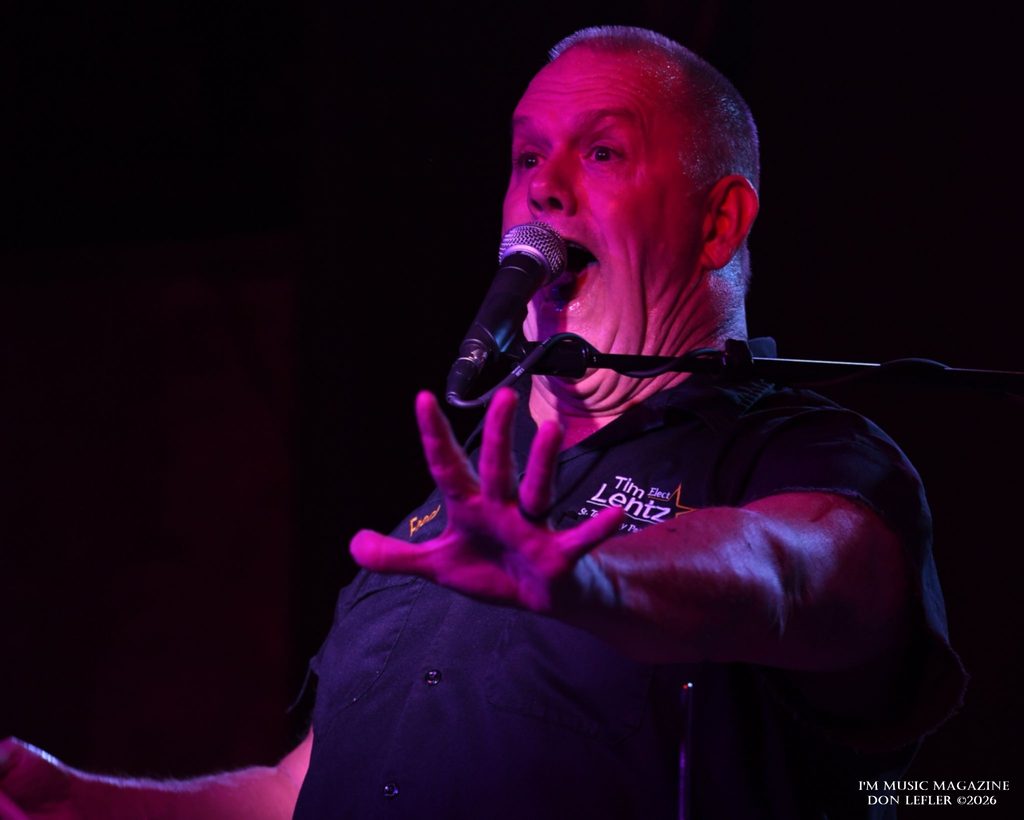
TIM BOARD: For those who have not been to a Cowboy Mouth concert, tell us about the red spoon tradition. How did it get started, and what did you think of it?
FRED LEBLANC: John wrote a song called, it’s the damnedest thing. John wrote a song called ‘Everybody Loves Jill,’ and he sings it, and it’s an insanely catchy song. For whatever reason, he wrote that this character Jill, who was actually somebody we knew, for no reason he wrote, ‘She has a red, red house, a red dog, a red cat.’ It was like a verbal hook. Nothing really to it in terms of substance at all. And then it was like ‘red cake with a red spoon,’ and then the song breaks right there, and people just started throwing spoons.
I have no idea how it happened. If I knew how it would happen, I would’ve gotten him to write the words ‘hundred-dollar bill’ in it.
TIM BOARD: How does it feel when the audience takes ownership of a song and turns it into something bigger than you imagined?
FRED LEBLANC: It’s great. The best part of doing this, especially when it’s something you write or something that you’re playing, it makes the audience as much a part of the creative experience as we are. It’s not just sitting there observing. When you write a song, when you play it, or when they have a visceral reaction to it like that, they’re as much a part of the creative experience as we are on a lot of levels.
And I really appreciate that. They’re making the same investment that we are, and that’s great, and everybody leaves having a great time.
TIM BOARD: After thousands of shows, is there anything an audience can do that still surprises you?
FRED LEBLANC: Oh, yeah. Honestly, they surprise me every night. That sounds like a cliche to say, but honestly, there’s always something that sticks out in my mind. Like, we were in Greensboro the other day. Were you at that show in Greensboro?
TIM BOARD: No, I live in Texas.
FRED LEBLANC: Oh, okay. We were at a show in Greensboro the other day, and actually we were at a show in South Carolina. This stuck out even more. We were having a really rough night technically on stage, like things weren’t working. I had trouble with the drums, and the guys had trouble with their amps, and we were really fighting it on stage.
But we came out in front, and everybody was like, ‘Hey, that’s one of the best shows we ever saw. That was great. You guys were blah, blah, blah.’ It’s like, ‘You didn’t notice that we were having…’ ‘No, we didn’t notice at all. In fact, this is great. I really enjoyed it.’ So kind of dealing with what we had to deal with technically really allowed us to let go of the performance, which made it more rewarding for the audience. So who knows? You never know what the hell’s going to happen.
TIM BOARD: You’re doing the single a month, and the year is about to come to an end. What comes next? Are you going to continue this in 2027? Are you going to combine the singles into an album?
FRED LEBLANC: No, no. No, I don’t know. I honestly don’t know. We’re making it up as we go along, just like everybody. My goal is to just finish the singles. We got November done. We’re working on December now.
And after that, I have no idea. I mean, do you honestly know what’s going to happen next year or the year after in your own life?
TIM BOARD: No, not really.
FRED LEBLANC: So take it as it comes. Just keep swinging for the fences, like we do every night.
TIM BOARD: Thank you so much for taking time to do the interview. I greatly appreciate it.
FRED LEBLANC: Well, thank you so much. You said you’re in Texas? What part of Texas?
TIM BOARD: Lubbock.
FRED LEBLANC: Oh, man. Our guitar player, John Griffith, he was born there.
TIM BOARD: Oh, really?
FRED LEBLANC: Yeah, he was born there. He was born and raised Texas. And another one of our guitar players, Frank Grocholski, he actually lives in Waco, so there you go.
TIM BOARD: Nice.
FRED LEBLANC: I always thought the best rock and roll bands would be a Louisiana rhythm section with a Texas guitar line. And that’s exactly what we have, so there you go.
Interview by I’m Music Magazine Music Journalist/Photographer Tim Board