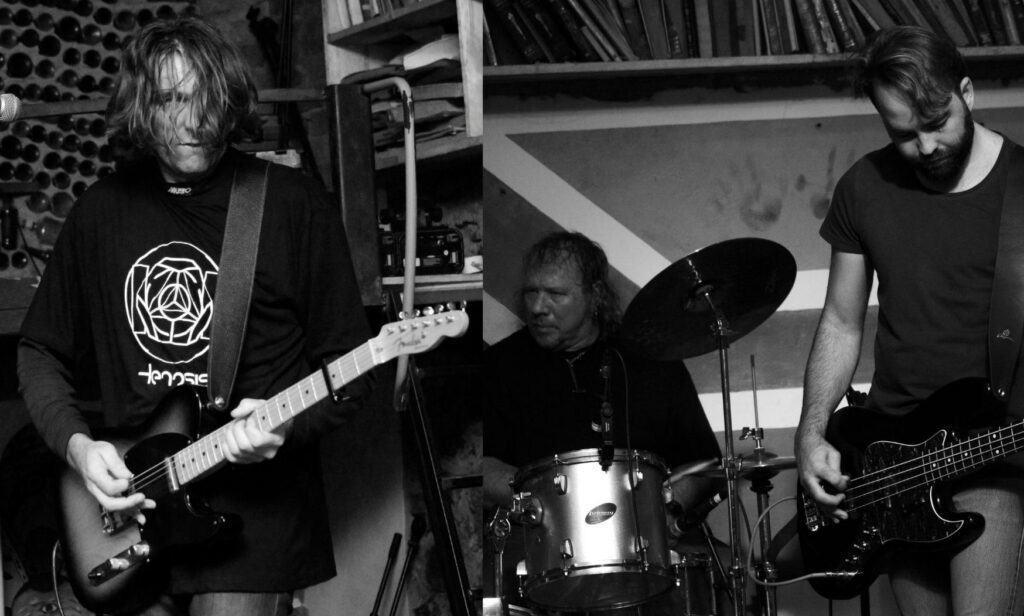
What do you do with a great song you wrote decades ago that never quite made it onto a record? If you are Mark Biagio, the creative force behind The Fismits, you ask yourself what Flea would do, and eventually you get the song right. With the Falling Joy EP, The Fismits frontman finally brings a collection of songs years in the making out into the open. What began in the mid-90s as raw ideas with Bruce Barrett and The Mind Theater has evolved into something more deliberate and personal. In this interview, Biagio opens up about revisiting those early songs, the freedom and isolation of going solo, and the long journey of finally getting the music to sound like himself.
Tim Board: A lot of the songs on Falling Joy started back in the mid 1990s when you and Bruce Barrett were writing together in The Mind Theater. When you revisit songs that old do they feel like messages from a younger version of yourself or do they become something completely new when you start recording them decades later?
Mark Biagio: I think it depends on the song. I think one of the songs, “When,” reminded me of my former self, and I had to reinterpret it to be a bit more current. I think if I had a chat with my younger self I would have said “you’re right but you’re also wrong” so we needed to change the message a little bit. Other tracks like “Independence” because it was still a very new track then it wasn’t that mature so it took on a whole new life and I could go wherever I wanted to with it so I think it gets very track dependent.
Tim: The Fismits started as a three-piece band and eventually became more of a solo creative outlet for you. Did that shift give you more freedom to revisit and reshape these older songs in ways that may not have happened in a traditional band setting?
Mark: I think definitely. The traditional band setting, I think I probably may have had to do a bit more convincing of the other members of the band to do this project, because those songs were closer to me than it would have been to them. That would have been an interesting discussion. But definitely I’ve got more freedom by myself. But then again, it was limiting because you’re the big fish in the small pond all by yourself, and sometimes to have other band members to naturally edit things I think is a valued asset. So I miss that. I definitely miss that. So there was a gain, there was a pro and there was a con. I think we’ll see one day if the cons outweigh the pros or the other way around, I don’t know.
Tim: How did you overcome that aspect of having band members to bounce something off of? Who did you have to bounce something off of as you were working on this?
Mark: I’ve got some friends and some people in the industry which I was able to get the songs to early enough to get their feedback, people that I trust, but it was very late in the process, so I think the songs took possibly a little bit longer than normally would have happened if you were in the cauldron of a band in a studio. I tend to have a process of recording something that I would probably do in the studio till late at night and then you’re very excited and then I purposely don’t listen to it for another day or two and then I’ll listen to it in the car, in traffic and so it’s completely fresh. It hits you while you’re distracted and that way I get to edit a lot of the things and go okay I’m bored now or I like that but I don’t like this so it’s a bit of a longer let’s say it’s a less energetic process than with a band but maybe less frustrating. You need more patience and maybe I’ve got that now at my age.
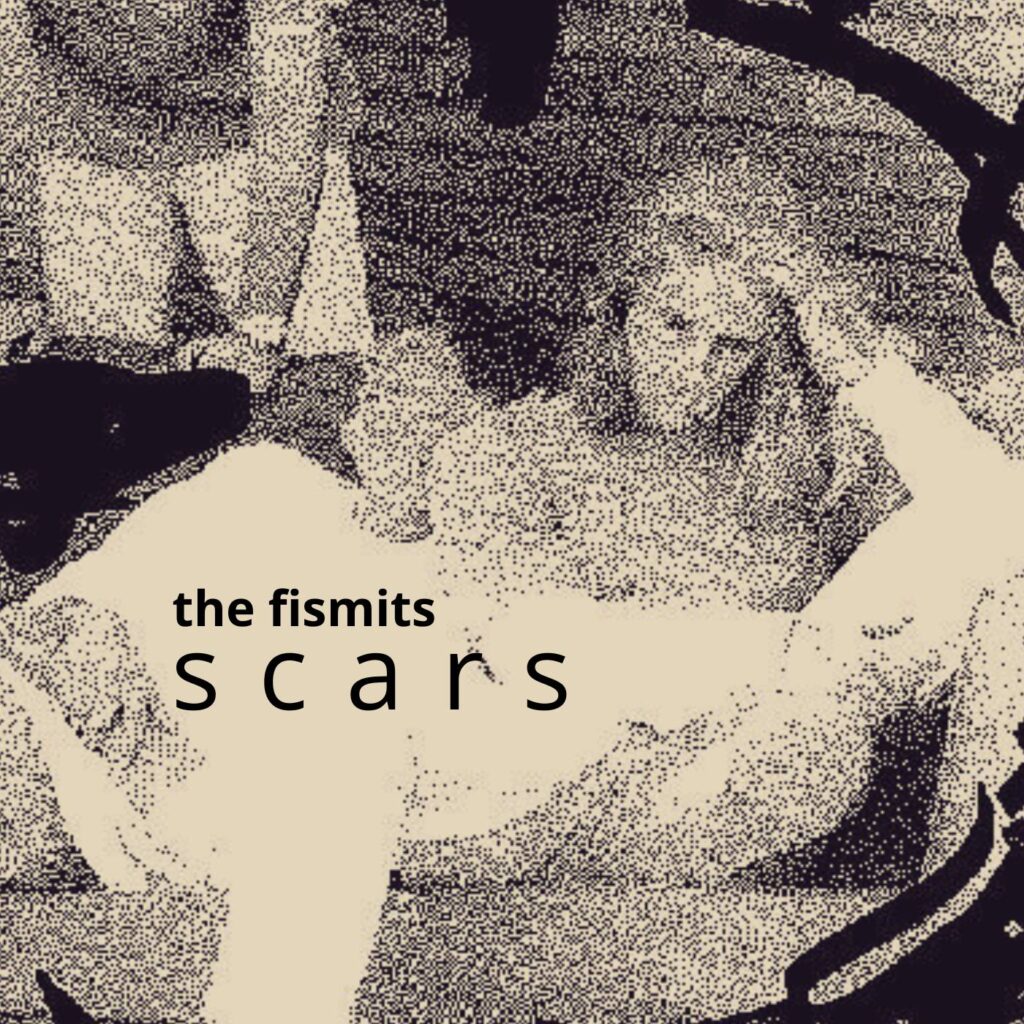
Tim: I want to ask you a couple questions about some of the songs on the Falling Joy album, starting off with “Scars.” It’s been around in different forms for years before finally getting this studio version for the album. Was there a moment during recording when it suddenly clicked and you knew this is the version?
Mark: Yeah, there was definitely a moment, but it was a long, hard journey, because this was one of the more mature tracks that we did back in the 90s, as The Mind Theater, and so, because it was such a great song in my opinion, as it was then. When I had other bands and we needed a fuller set or we needed to fill tracks because we were still figuring out the material and things like that, I would always say, “How about this song?” Then we would end up doing it, but we would end up doing it as the original. Even when The Fismits came along I threw it into the set and everybody loved it and it kind of worked but the minute I started recording it I was just never happy with the recording. It just sounded like a bad cover and I had a long journey of walking away from the song and then when I’m sitting down in the studio, saying, “okay what haven’t I done for a while?” Let me open up “Scars” again and listen to it, and I had probably three or four goes over two years at opening up that box, Pandora’s box, if you will. There was a moment in 2025 where I then told myself to just forget everything that I was attached to in that song and just approach it very differently. I was struggling with the intro, and the intro was very acoustic previously and my voice wasn’t sounding good. I played around with keys and all these sorts of things. Then I found a key I was happy with, but it wasn’t until I then decided to try a Red Hot Chili Peppers kind of approach, and I was like, what would Flea play? If I had him in the studio, what would he play? Then I just bashed something out, and that kicked me in the right direction, and then the whole song sort of lined up, just off the intro bass line. I felt I was free to go, because I’d already kind of bungee jumped, right? I’d already left it all behind, so let’s just keep going, and that was the moment that it then took shape, and it started sounding like me. More than a bad cover.
Tim: “Independence,” the song takes a turn with electronic textures and a bit of 80s feel. What made you want to push the song in that direction instead of sticking closer to the original indie roots?
Mark: Well, I think because that song was never ever finished back then. I still had the indie roots in my head. So Bruce and I wanted to record it, but we never got a chance to really record it, it was very inspired by the early British indie stuff of the ’90s. That’s what I call indie. Obviously, indie’s kind of changed now, but it was very sort of Stone Rose‘s influence James influenced. It would have been House of Love influenced because that’s the stuff we were listening to at the time, and so I kind of started there because the bass line was very in that vibe. I went back to that original bass line and then it just built it all up. Obviously I think I naturally went a little bit further backward into it, because parts of it reminded me of sort of the early The Cure stuff. Then I was like, okay, what about a guitar line like this, or whatever the case? Then other grooves were reminding me of, say, something of “Music for the Masses.” from Depeche Mode. Then playing with ideas and then feeding off of those ideas. So I probably went a little further back than the original brief would have been in the 90s. I was really excited about the direction, that was the one song that I was actually gaining energy from start to finish. I didn’t have to pocket and come back like “Scars.”
Tim: A lot of the songs deal with reflection, relationships and emotional distance. Do they feel more honest to you now than they might have if you recorded it back in the 90s?
Mark: No, I think that thread would have stayed the same, because that was Bruce’s department. I mean, Bruce was very good at that kind of a message. A lot of those songs were very close to the band. I know the people involved in those songs at the time. So I tried to keep a strong element of that true, although we had to change certain things, so I think definitely “Scars” is still in that element, sticking true to that emotion and that feeling, just maybe interpreted from my perspective, less than Bruce’s perspective. “Independence” probably similarly so, I mean, it was just more edited. I think “When” is slightly different. “When” is still about, it was an anthem for me then and it’s an anthem for me now kind of thing, but I just had to translate it over time. I think they’ve just been slightly modernized, like I said earlier. I think they still feel the content is still there. The main thread is still there.
Tim: Did you learn anything about yourself doing this that maybe subconsciously or even consciously you didn’t know about as you’re going back and revisiting these songs and then coming forward and recording this album?
Mark: Yeah, I think it’s, I think there’s an inner confidence that I was able to, because these songs were not necessarily holy grails, but they were kind of very close to myself and that’s why I took on the project. I have this urge that good songs need to be heard. We at least need to put them out there and let them fail or let them succeed, but they can’t just be buried there, and so that’s what I wanted to really get out of it, and I think something like “Scars” getting through that Pandora’s box that gave me a confidence that, hang on, I can do these things my way and they can still sound good, otherwise I wouldn’t have put it out there in my opinion. So it’s definitely given me more confidence.
Tim: What do you hope the listeners come away with after listening to the album?
Mark: I don’t really have much influence over what they may think or may not think or what their ears could perceive. In the best case scenario, it would be they like the songs and they connect with the songs and they listen to the songs for whatever reason they do. I don’t necessarily have an agenda or something to say that this is kind of the mood, this is what you may think the song is about, but enjoy the track right and the song’s got to stand up you know. What I’m trying to get out of it is the songs just need to be heard.
Tim: Your previous album, Before the Hindsight, featured backing vocals from your sons. How does Falling Joy continue that personal narrative, especially with the idea of letting these songs rest after such a long journey?
Mark: I don’t know, I don’t think I have connected those dots. Look, I’m not a fantastically schooled musician. I have a work ethic and a determination to get something done, and I’ll figure out how to do it, and I think that is probably the thread between the two. They were two very different projects at two very different times. Falling Joy kind of evolved to have a purpose, a package. Before The Hindsight was more of a sort of like, oh we’re in COVID. I’ve got some time. “Oh, hang on, I’ve got a whole album’s worth of material, let’s finish it.” That’s how it happened. “Amazing,” the track that my kids were on was a song about their cousins, who happened to live in the States, and because it was a song about their cousins, who were young girls. I think it needed some kids on there to make a racket, and hence the kids featured on the song. Like I said, I will figure out a way to make my song happen. I don’t necessarily start out with a plan, like maybe some more schooled musicians or schooled producers would do. We just do a rock track and it’s going to be this, and this is the formula. I play in my church band a lot, you know, there is a formula. Some guys may freak out, but there is a specific formula in worship and Christian music, and probably in a whole bunch of other genres. I am not that clever, I can’t follow a formula.
Tim: Any future collaborations with your children again?
Mark: I don’t know, I think they were excited, they love their music but they not into playing music, they didn’t have the, what’s the word, they would come up with a reason not to go to drum practice, guitar practice. So I said, “Okay, let’s call it a day, you’ll come back to it if you ever want to come back to it.” It is what it is.
Tim: The EP is coming out. What else are you working on?
Mark: Well, we’ve got some new tracks that I started working on before the EP kind of got packaged so I will get back to those the moment all the interviews stop and the preparing for an EP launch show and all that sort of stuff. There’s always more tracks, I did Bruce’s tracks that I wanted to do, so I think that’s kind of parked. This is the end of that chapter, and I’d like to get back to finishing those tracks that I started earlier this year, last year, and see where that takes me. I think that’s going to be an interesting journey. I think it’s more stripped down, more raw, sort of almost like the last track on the Falling Joy EP, “Too Small a Word.” I kind of started going in that direction. I think because the two or three tracks that I was working on sounded good, so I went there. That’s what the new tracks will sound like, but we’ll see, it takes me a long time.
Tim: I want to thank you so much for taking time to do this, greatly appreciate it, wishing you much success with the EP.
Mark: Thank you so much.
Interview by Music Journalist/Photographer Tim Board
Connect with The Fismts:
Facebook https://www.facebook.com/fismitsband
Instagram https://www.instagram.com/thefismits
YouTube https://www.youtube.com/@fismitsthe9640
Spotify https://open.spotify.com/artist/5nqgrxXIFkHTLuoUaAFkM1