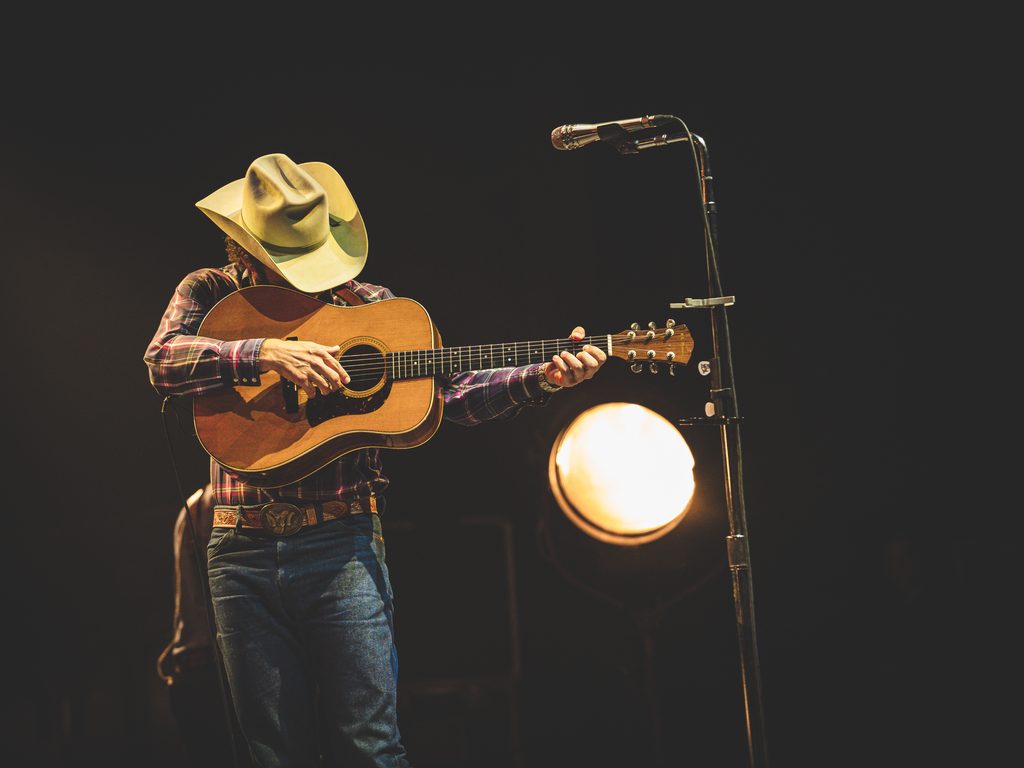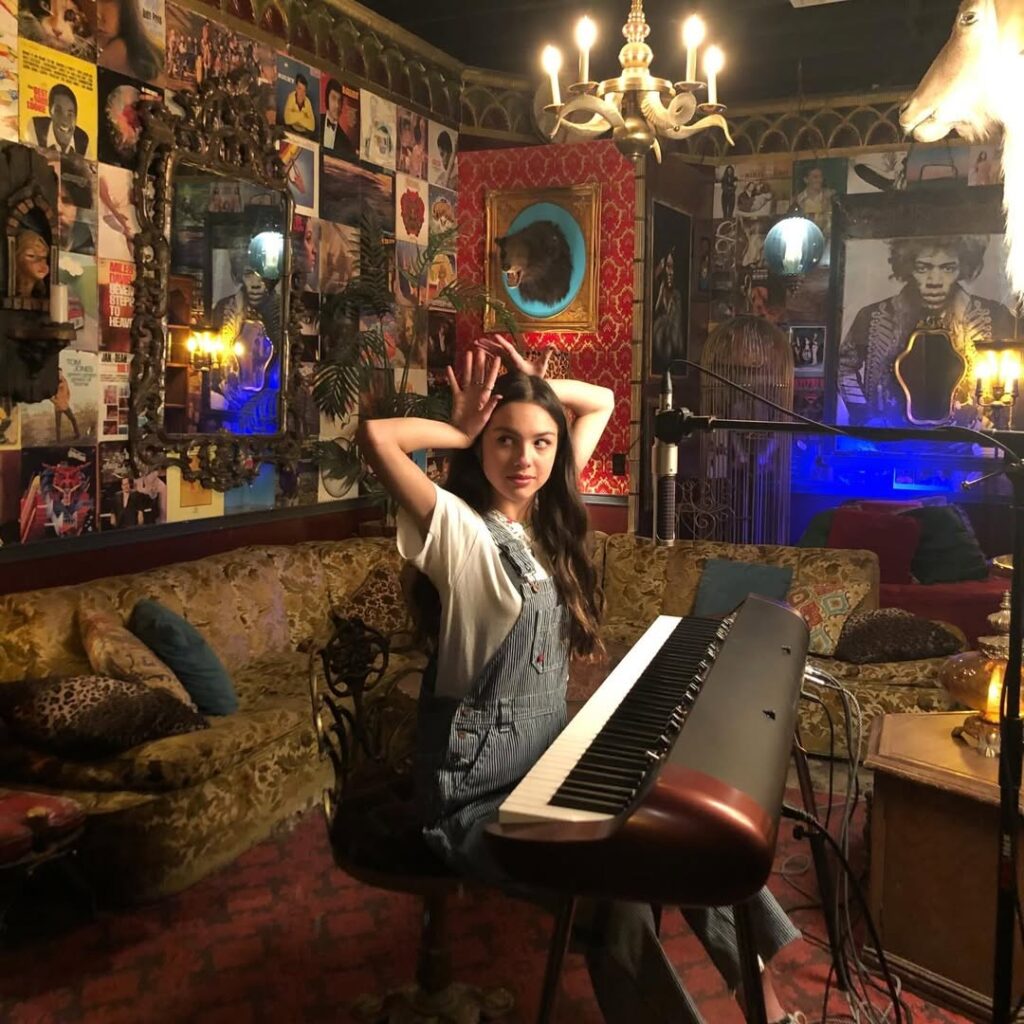
There is a specific, violent frequency to young heartbreak that most people spend the rest of their lives trying to forget. We bury it under the calluses of adulthood, often dismissing it as a symptom of a temporary fever. But Olivia Rodrigo has spent the last five years turning that exact fever into an empire.
When she first drove through the gates of global stardom in early 2021 with her massive hit “Driver’s License,” she didn’t just release a song; she tapped a vein that connected with young women everywhere. Here was a 17-year-old girl articulating the claustrophobia of suburban grief with the precision and the devastation of a wrecking ball. Yet, the question that lingered over the multi-platinum debris of her debut album, SOUR, was a cynical one: What happens when the fever breaks?
Olivia answered, and her response arrived not in a whimper, but in a distortion pedal. With 2023’s GUTS, Rodrigo proved she wasn’t a transient voice of a generation, but a meticulous student of rock & roll history, weaponizing loud, quiet, loud, Seattle inspired dynamics and riot-grrrl sarcasm. Now, at 23, Rodrigo has stepped completely out of the purple hued shadow of her youth. Her third studio album, You Seem Pretty Sad for a Girl So in Love, released last Friday, is a sprawling, rain slicked, and fiercely cinematic masterwork. It trades the neon lit tantrums of teenage pop-rock for the midnight shadows of 1980s post-punk and New Wave. It’s the sound of an artist letting go of the need to scream, realizing that a whisper in the dark can be infinitely more relatable.
To understand the poetic friction at the heart of Olivia Rodrigo’s music, you have to understand the surreal landscape from which she emerged. Raised in Temecula, California, Rodrigo grew under the blinding, clinical lights of the Disney Channel apparatus. She starred in Bizaardvark and later anchored High School Musical: The Musical: The Series. Disney life is a corporate machinery designed to polish away all of an artist’s rough edges, to substitute genuine human complexity with a perpetual, high gloss smile.

But Rodrigo was always a Trojan Horse in the kingdom of the mouse, proving she really is the auteur born from a mousetrap.
While her peers were learning to hit their marks, Rodrigo was in her trailer reading Joan Didion and listening to White Stripes’ records. The first true crack in the porcelain facade came when she penned “All I Want” for the High School Musical soundtrack. A self-assigned songwriting task that bled with an unvarnished vulnerability too heavy for a teenage sitcom. It was the moment the industry realized they weren’t dealing with a manufactured pop princess as they had seen in the past, but a classic singer songwriter who just happened to have a Disney contract.
When she finally broke free alongside producer and chief co-conspirator Dan Nigro, SOUR became an immediate cultural reset. It didn’t just top the charts; it colonized them. Rodrigo took her hyper-specific, diaristic, detail-oriented lyricism and grafted it onto the bruised, alt-rock skeleton of Alanis Morissette and Fiona Apple. She made it cool for teenage girls to be angry again, to be messy, and to be deeply unpolished. By the time she swept the Grammys, she had rewritten the blueprint for modern pop stardom.
If Rodrigo’s music feels remarkably unbothered by the polite expectations of pop stardom, it is because she has spent her life studying a lineage of women who tore those expectations to shreds. Rodrigo has never hidden her identity as an unabashed music fan, a self-proclaimed “fangirl” whose musical DNA is hardwired to the fearless alt-rock goddesses and Riot Grrrl iconoclasts of the 1990s.
Rodrigo has often mentioned trailblazers like Kathleen Hanna of Bikini Kill and Courtney Love of Hole as heroes consciously adopting their subversion of the feminine archetype. It’s why she has toured exclusively with an all-female backing band and hits the stage with a custom St. Vincent electric guitar. She isn’t just performing; she is claiming her place in a historical sisterhood of noise.
This 90s lineage shapes more than just her sonic palette; it governs her emotional psychology. From Alanis Morissette’s Jagged Little Pill, Rodrigo learned how to weaponize the unflattering margins of heartbreak, the bitter, petty, and unhinged thoughts society tells young women to bury. From Fiona Apple’s Tidal, she learned how to sit at a piano and bleed. Rodrigo frequently references Apple as a lodestar for her creative process, once noting that Apple’s “Sullen Girl” was one of the very first songs she ever mastered on the keys.
By pulling from the raw, unfiltered storytelling of Tori Amos, PJ Harvey, and Kim Deal of The Breeders/Pixies, Rodrigo learned that a pop song could be a psychological exorcism. She inherited their willingness to be deeply vulnerable and entirely unpolished, turning jealousy and self-sabotage into high art.
For all its brilliance, Rodrigo’s early era was defined by a specific kind of teenage friction: the high-octane crunch of pop-punk and the snarling, garage rock revivalism of “good 4 u” and “all-american bitch.” It was music meant for jumping, for slamming bedroom doors, for sweating out frustrations. But an artist can’t live in a state of perpetual adolescence, and the limitations of the pop-rock template can eventually begin to feel like a cage. This signaled a movement of leaving the garage for a neon twilight. During the lengthy writing process for her new record, much of which was spent soaking in the gray, atmospheric winters of London, Rodrigo found herself drawn to a different kind of anxiety. She realized that the most devastating heartbreaks aren’t always loud; they are cold, isolated, and hollow.
To map this emotional shift, she entirely overhauled her sonic architecture, muting the aggressive guitars to make room for the haunting, mechanized textures of 1980s British New Wave and post-punk. Stitching influences of Gothic romantics like the Cure, with New Wave futurists, with the driving synthesized anxiety of 80s legends like Gary Numan, Devo, and even New Order.
Rodrigo doesn’t just mimic these sounds; she inhales them. By trading distortion for analog synthesizers and melodic basslines, she’s found the perfect canvas for a very specific kind of emotional vertigo: the feeling of dancing under a strobe light while your heart is breaking in half.
Which brings us to Rodrigo’s latest release, You Seem Pretty Sad for a Girl So in Love.
This latest release on Geffen Records is the true anatomy of an unraveling. Confronted with the task of following up two of the most successful pop albums of the last decade, Rodrigo seemed to be looking for a fresh start. Fans know she has always been associated with her iconic shade of lilac, which defined her early career. She did the bravest thing an artist in her position could do she abandoned her signature color. For this rebirth, she commissioned artist Chloe Wise to paint an alternative vinyl cover featuring her clad in a pink babydoll dress, menacingly holding a switchblade.
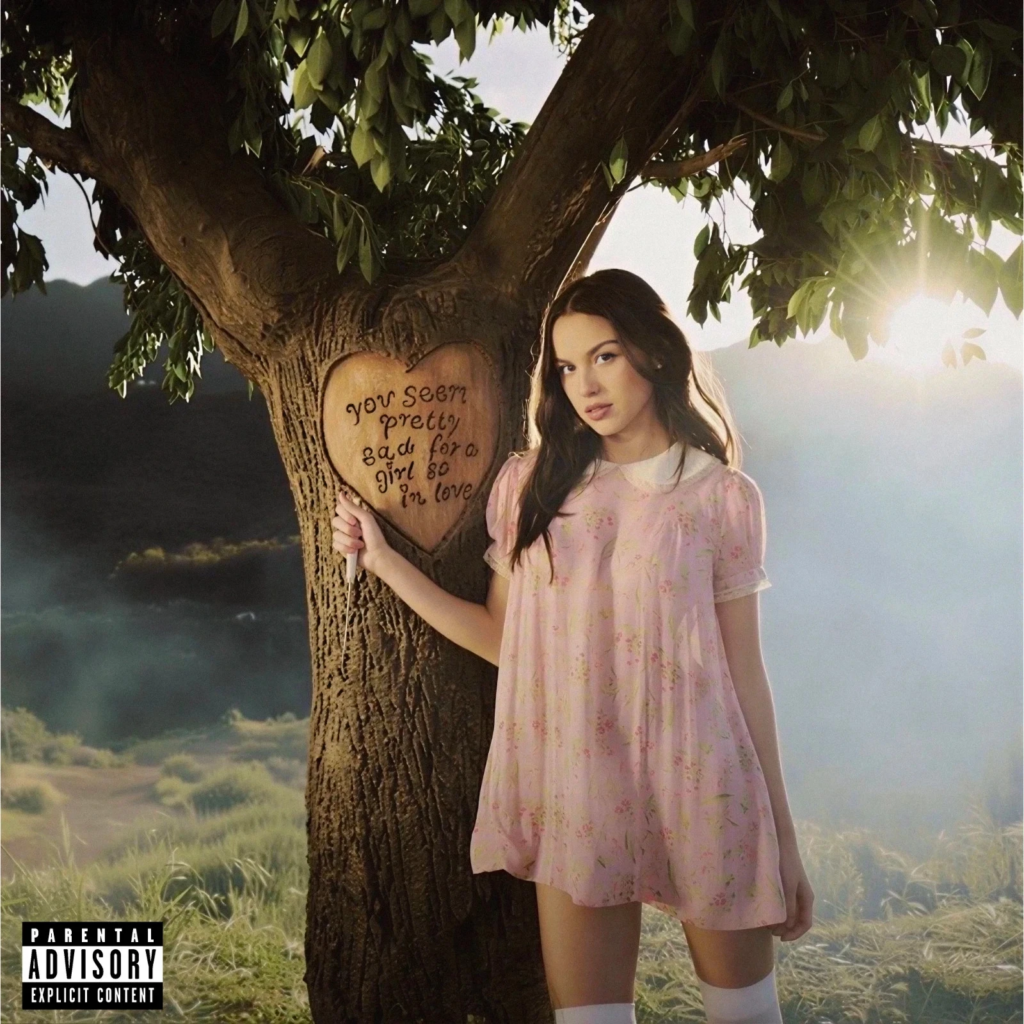
The standard cover features her sailing into the sky on a playground swing, a deliberate, brilliant nod to Jean-Honoré Fragonard’s Rococo masterpiece The Swing. It’s an aesthetic promise of aristocratic frivolity masking something deeply dangerous.
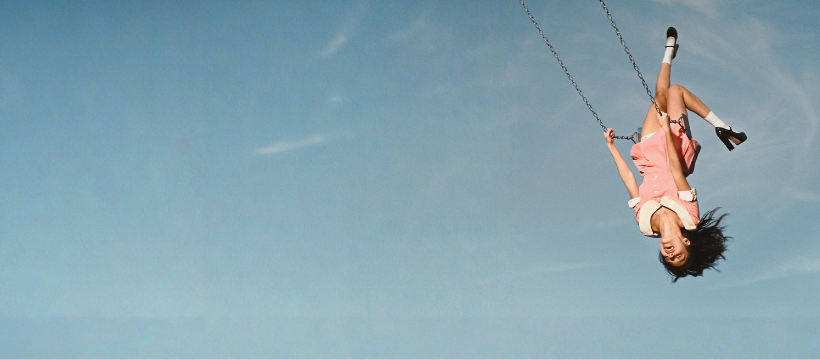
You Seem Pretty Sad for a Girl So in Love is a 13-track concept album that maps the slow, agonizing decay of a relationship. It’s divided cleanly into two psychological halves: the intoxicating, paranoid rush of infatuation (Girl So in Love) and the crushing, hollow aftermath of losing oneself to another person (You Seem Pretty Sad).
The record opens with the lead single, “Drop Dead,” a relentless, dark-pop anthem propelled by a synth driven bassline that feels like a pulse. “You’re so so pretty boy, I’m paranoid I made you up,” Rodrigo sings, perfectly capturing the dizzying, terrifying vertigo of early love. Imagine bubblegum pop dipped in battery acid, instantly recalling the creepy, danceable euphoria of early New Order.
But the true tectonic shift occurs at the album’s midpoint with “Purple.” Acting as a literal and figurative bridge, the song opens as a lush ballad about two lives melting into one, then collapses into a haunting electronic outro in which Rodrigo delivers the devastating realization: “Melt with you ’til it just feels sad.”
From there, the album plunges entirely into a gorgeous, gothic twilight. The emotional epicenter is undoubtedly “What’s Wrong With Me,” a track that features a historic guest appearance by Robert Smith of The Cure. It marks the first time another artist has ever appeared on a Rodrigo studio album, and the result is nothing short of breathtaking. Smith’s legendary, mournful vocal delivery wraps around Rodrigo’s delicate, breathless falsetto like sea fog over a graveyard. When their voices collide on the chorus, it feels less like a pop song and more like a séance, a cross-generational passing of the torch between two poets often found living in the dark.
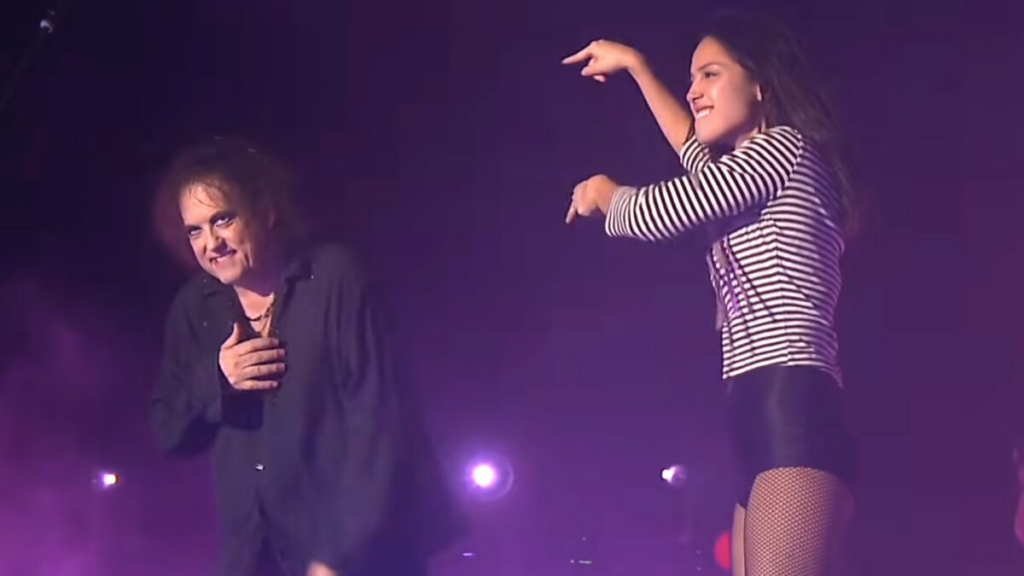
This album may feature Olivia Rodrigo at the peak of her artistic superpowers. The album is rounded out with tracks that identify with every young woman navigating love, maturation, and heartbreak. “Stupid Song” takes a satirical look at the performative nature of modern love. “The Cure” takes hold of your every being as an atmospheric, cinematic epic ballad showcasing Rodrigo’s growth into one of the most formidable vocal powerhouses of this generation. As the album closes with “Cigarette Smoke” she leaves listeners with a sprawling, slow burning epic that leaves you sitting alone in the quiet ash of a love story that just fell apart.
As Rodrigo leaves behind the pop-rock standard she’s been known for, she’s in her the Queen is Dead phase, and long live the auteur. With You Seem Pretty Sad for a Girl So in Love, Olivia Rodrigo has pulled off the ultimate artistic magic trick. She has taken the massive, multimillion dollar influence of her celebrity and used it to fund her most experimental, insular, and artistically uncompromising record yet. Shedding the pop-rock signifiers of her past and stepping boldly into the neon tinted dark of the 1980s, she has proven that she is more than just a pop star.
At 23, she stopped looking for validation from her exes, from her critics, or even from her idols. She has written an album that feels her own, a love letter to the wayward, beautiful, and terrifying anxieties of young adulthood. The high drama pop star of yesterday has grown up into a modern gothic queen.
I’m Music Magazine Music Journalist Jon Faia
Connect with Olivia Rodrigo on Social Media