By: Jonathan Faia

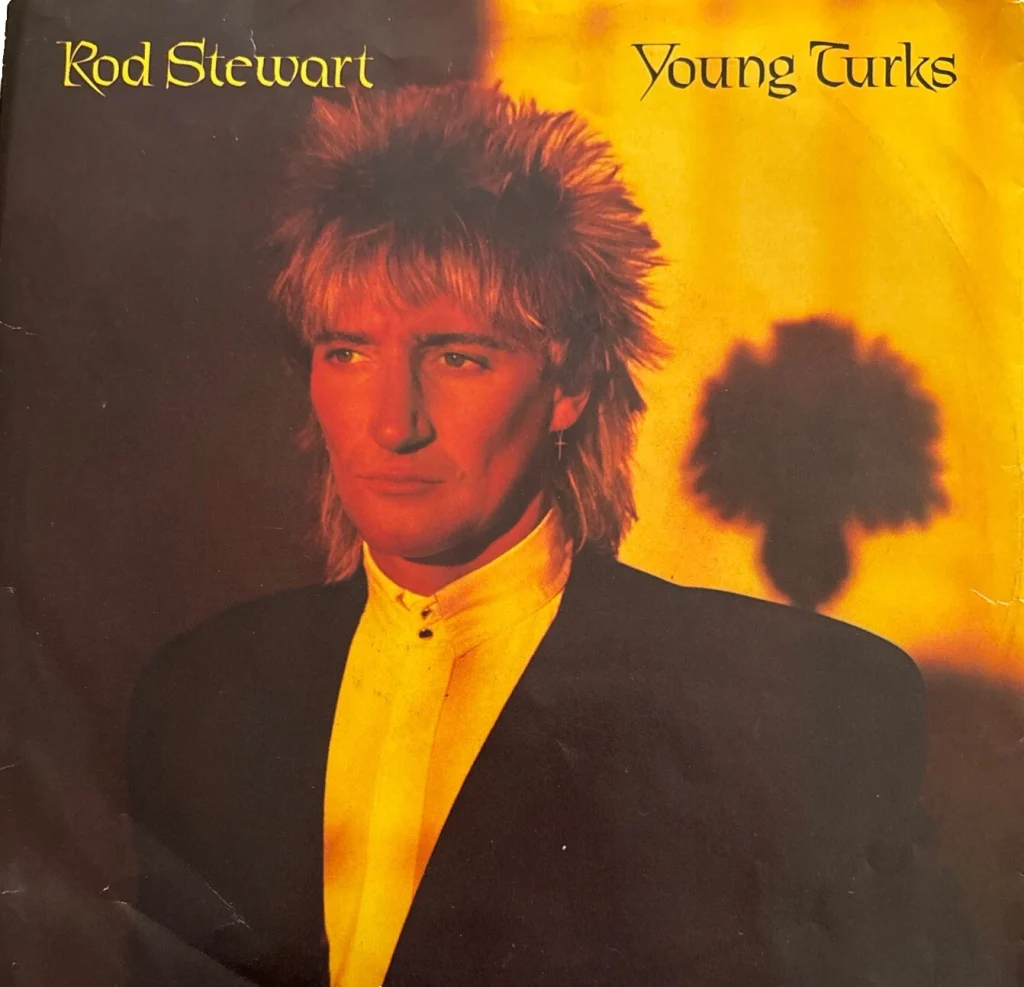
Sometimes you come across a song that doesn’t just play through speakers; it feels like the pulse you’ve been waiting a lifetime to feel. “Young Turks” by Rod Stewart is one of those rare transmissions. A lyrical lifeline thrown across the chasm of youth, where loneliness and longing can feel like all there is to life. It’s more than a soundtrack for escape; it sanctifies escape.
Before the world was wired and buzzing, silence had a different weight. It wasn’t peaceful; it was planetary. A heavy, humming hush that settled into the bones of anyone who felt out of step with their surroundings. The pre-digital quiet of the 1980s often felt like a misdialed frequency, broadcasting your fears and dreams into static. Alienation wasn’t an aesthetic; it was an atmosphere. And in that atmosphere, music became the only map.
For me, “Young Turks” wasn’t just a song; it became a signal. A shimmering, synth reminder that somewhere out there, someone else felt the same frantic ache to break free.
By the time I found “Young Turks”, the track was already a decade old, but its urgency hadn’t aged a day. Released in October 1981 on Tonight I’m Yours, the song marked Rod Stewart’s leap into the electric frontier of drum machines and sequencers. Stewart, like many other artists, took a risk with elements found in the new‑wave shimmer. Stewart, always a shapeshifter, embraced the rising synth-pop tide with fearless curiosity. He wanted a sound that sprinted. A sound that felt like youth outrunning its own shadow.

With help from the track’s musical architects, Carmine Appice, Duane Hitchings, and Kevin Savigar, they built the song’s backbone from the era’s newest toys: Linn drum machines, analog synths, and sequenced bass lines that felt like a heartbeat in overdrive. Hitchings once described the song’s creation as “trying to capture motion,” and you can hear that intention in every measure. The song doesn’t walk. It runs. A song born from restlessness and reinvention.
Commercially, it soared: No. 5 on the Billboard Hot 100, No. 11 in the U.K., and a staple of early MTV. But its true legacy lives somewhere quieter in the hearts of those who heard themselves inside its story.
Because “Young Turks” isn’t really about rebellion. It’s about recognition.
The song’s subjects, Billy and Patti, aren’t just characters; they’re conduits. Two young souls who finally find someone tuned to their exact frequency. Someone who hears the hidden hum beneath the silence. Someone who understands that sometimes the bravest thing you can do is simply believe in your own future.
Their story is deceptively simple: two kids running toward a life they haven’t lived yet. But beneath that simplicity is a symphony of sincerity. Billy leaves home with nothing but a dream and a determination that borders on defiance. Patti follows with a heart full of hope and a fearlessness that feels almost holy. Together, they become the embodiment of youthful urgency. The belief that love isn’t just an emotion but an engine.
Stewart never paints them as rebels without cause. Instead, they’re dreamers with direction. They aren’t running from responsibility; they’re running toward possibility. They want a world where their love isn’t questioned and where their dreams aren’t dismissed. Their story is determined to make sure they find a future not predetermined by someone else’s past.
The chorus, “Young hearts be free tonight,” is more than a hook; it’s a heartbeat. A breathless promise that freedom isn’t a place; it’s a feeling. And if you close your eyes when it hits, the song becomes cinematic possibility. You can almost see Billy and Patti running toward something luminous.
That’s the beauty of the track: its alliteration of emotion. Restlessness becomes refuge, as fear becomes fuel. Their love becomes a source of liberation.
In a world that often felt slow, waiting for film to develop, landlines to ring, and life to begin, “Young Turks” moved at the speed of yearning. It captured desperation in the belief that if you don’t leap now, the moment might vanish forever. That young love, imperfect and impulsive, might be the only honest compass you ever get.
And isn’t that what so many of us wanted? Not perfection necessarily, but permission to chase a dream.
The song never once says “Young Turks,” but it doesn’t need to. It gives you the feeling instead of becoming a runaway in your own heart, claiming independence from the expectations that tried to script your life before you ever lived it.
Billy and Patti’s story is fictional, but the freedom they chase is universal. They’re the patron saints of every kid who ever felt misunderstood, or every young couple who ever believed their love could rewrite the map. They were dreamers who felt the world whisper not yet and decided to run anyway. The world could be a much better place if we were able to recognize the freedom in fiction a little more.
The legacy of “Young Turks” is a lifeline. It’s a song that didn’t teach me how to escape; it taught me how to endure, turning alienation into a beautiful secret.
Ultimately, the song remains a shimmering reminder that the world belongs to those brave enough to love intensely and recklessly, listening closely to the quiet frequencies inside all of us. It’s a love letter to liberation addressed to every young heart that ever dared to be free.
And maybe that’s why “Young Turks” still lingers as a last line whispered in a darkened theater. Because when Stewart belts that bright blue benediction, “young hearts be free tonight,” the world briefly feels wide again. You can see Billy and Patti silhouetted against some endless horizon. Their future flickering like film grain, while their footsteps sync with the song’s sprinting heartbeat. They aren’t just running; they’re writing. Sketching their own script across the sky, choosing courage over caution. They take love’s ultimate risk, choosing each other over everything else.
In that final fade, the track becomes a time machine not pulling you backward but pushing you forward. It reminds you that every life has a moment where you stand at the edge of your own story, sometimes breathless and trembling, waiting to decide whether you’ll stay or leap. Stewart’s anthem urges you to leap and trust the trembling. To believe that somewhere beyond the noise and doubt, past the slow days of youth, there’s a place where your heart can finally outrun its history.
As you listen to the song more and more, you realize the song becomes a myth. Billy and Patti stop being characters and start becoming archetypes for the eternal wanderers and star‑crossed cartographers of young love. Their story anoints them as the patron saints of every runaway dream. All too many times in life we’re tricked into thinking that love can’t defy gravity, but in reality, every pair of young hearts who ever believed their devotion can bend destiny.
“Young Turks” doesn’t just celebrate freedom; it consecrates it. It leaves you with the lingering belief that love, young, wild, imperfect love, can still be the spark that sets the whole world spinning. And as the last notes dissolve into silence, you realize the song hasn’t ended at all. It’s still running and reaching just like Billy and Patti. Just like every young heart that ever dared to be free.
I’m Music Magazine Music Journalist Jon Faia
Find all things Rod Stewart online:
Official Website
Official Instagram
Official YouTube
http://www.youtube.com/@rodstewart
Official X/Twitter