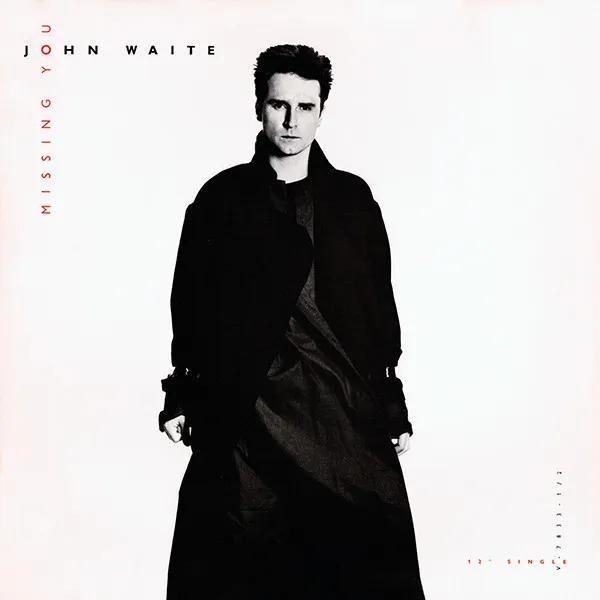
If the 1980s had a specific frequency for “longing,” it sounded exactly like the opening synthesizer swell of John Waite’s 1984 masterpiece, “Missing You.” On paper, it’s a contradiction. It’s a mid-tempo rock ballad about denial, wrapped in the glossy production of the MTV era. In a world that recycles everything, and being a part of a generation that’s not yet ready to let go, “Missing You” decades later, remains one of the most enduring artifacts of the 1980’s—not because of the hair or the shoulder pads, but because it captures a universal human glitch.
At its core, “Missing You” is the ultimate “liar’s anthem.” The brilliance of the lyrics lies in the tension between honesty and just trying to get by. Waite spends the entire track insisting, “I ain’t missing you at all,” but the sheer desperation in his voice tells a completely different story.
What’s beautiful about “Missing You” is that it captures that specific stage of grief where you try to convince yourself that you’ve moved on, even as you’re staring at the phone or walking past “their” favorite bookstore. It’s the musical equivalent of saying “I’m fine” while holding back tears. The emotional dishonesty is what makes the song so relatable; we’ve all been the person trying to outrun a memory.
To understand why this song defined 1984, you have to look at the landscape of the time. The 80s were a period of massive transition—technological, social, musical, and MTV ruled it all. The song was everything 80’s: synthesizers, and the vocals of a 1970’s frontman trying to reinvent himself. Though some 1970’s success with the band The Babys– Waite, like a lot of other 70’s artists, was not ready for retirement life. In the burgeoning age of MTV, the video featured Waite wandering through a dark, moody New York City. It aestheticized urban loneliness, turning a private heartbreak into a cinematic experience that fit perfectly between clips of Duran Duran and Cyndi Lauper music videos.
“Missing You” hit #1 on the Billboard Hot 100, proving that even in an era dominated by high-energy dance-pop, there was a massive appetite for raw vulnerability.
Beyond the synthesizers lies a profound, tragic poetry. There is a specific kind of loneliness that “Missing You” inhabits—it isn’t the loud, crashing sorrow of a fresh breakup, but the quiet, persistent hum of a life being lived in someone’s shadow.
When Waite sings about the “message in the wire,” he evokes a desperate image of a connection that isn’t really there. The tragedy is found in the exhaustion of the lie. It’s poetic because it mimics the way we tell ourselves we’re okay because the alternative—admitting that the absence of one person has hollowed out our entire world—is too heavy to carry. The song is a three-minute-and-thirty-second portrait of a man trying to convince his own heart to stop beating for someone else.
Why does a song from 1984 still get heavy rotation on streaming services and soft-rock radio? “Missing You” plays the role of a breakup song, telling the story of losing someone, but it gives a glimpse of the ego involved in not being fully ready to move on. Too often, it’s our pride that keeps us from admitting we’re broken. This song has been covered by everyone from Tina Turner to Country musicians, proving the melody and sentiment are indestructible regardless of the genre. For those who lived through the 80s, “Missing You” is a time capsule. For younger generations, it’s “retro-cool”—a slice of authentic analog emotion in a digital world.
“Missing You” proves it isn’t just a song; it’s a mood. It’s the sound of driving alone at 2:00 AM, the streetlights blurring past, thinking about someone you swore you’d forgotten. It’s a reminder that no matter how much technology changes—from “messages in the wire” to DMs and encrypted chats—the human heart remains just as stubbornly prone to missing the very people it claims to have left behind.
John Waite gave us permission to lie to ourselves for a few minutes. And in doing so, he told the absolute truth about how much it hurts to let go.
By I’m Music Magazine Music Journalist Jon Faia
Jonathan Faia is a music journalist and internationally selling author of the books, Wylde Serenity, and Love Letters From Barstow. With writing credits spanning major magazines, cultural websites, and music‑industry leaders, Faia blends his Gen X roots with a deep reverence for classic storytelling. His work forges emotional bonds with readers of all ages, drawing from influences that stretch from the Beat Movement’s jazz‑soaked introspection to the raw electricity of punk, 80s rock, grunge, alternative, and indie. Every piece he writes is driven by a lifelong devotion to the place where great words and great music meet.
Some of his favorite artists include punk legends Black Flag, Descendents, and Bad Religion. More recently, he’s grown deeply attached to The Hold Steady, drawn to their fusion of storytelling, poetic alliteration, and honest “bar‑band” work ethic—songs that feel like roadmaps for the questions we all carry in our hearts.